
Dog Training Guide for Beginners: 7 Simple Steps That Actually Work (2026)
Training your dog doesn’t have to be complicated. Many new dog owners feel overwhelmed at the beginning, but the truth is simple: with consistency, patience, and the right approach, any dog can learn. If you’re wondering where to start, how long training takes, or why your dog isn’t listening, this guide will walk you through everything step by step.
By the end, you’ll understand how to train your dog, fix common behavior problems, and build a daily routine that supports long-term success. If you’re working on several skills at once, my Crate Training for Beginners guide explains how I approached crate training with Alex and what I learned along the way.
What Is Dog Training and Why It Matters
Dog training is about teaching your dog how to behave in everyday situations. It helps your dog understand what you expect and how to respond.
A well-trained dog is:
- easier to manage
- safer around people
- more confident
- less stressed
Without training, dogs often develop unwanted habits like pulling on the leash, barking excessively, or ignoring commands.
If you’re just starting, begin with this dog training basics guide to learn the foundation commands.
Step 1: Start with Basic Commands
Every dog should learn a few essential commands first.
Core commands include:
- sit
- stay
- come
- down
These commands help you control your dog in daily situations and build communication.
For a full breakdown, follow the dog training basics guide to practice each command correctly.
Step 2: Use Positive Reinforcement
Dogs learn best when they are rewarded for good behavior.
Rewards can include:
- treats
- praise
- toys
When your dog follows a command, reward them immediately. This helps them connect the behavior with the reward.
Avoid punishment-based methods. They often create fear and confusion rather than learning.
Step 3: Keep Training Sessions Short and Consistent
One of the biggest mistakes owners make is overtraining.
Ideal training session:
- 5 to 10 minutes
- 2–3 times per day
Short sessions keep your dog focused and prevent frustration.
Consistency matters more than duration.
Step 4: Build a Daily Routine
Dogs thrive on routine. A structured day makes training easier and more effective.
Your routine should include:
- feeding
- walking
- training
- rest
When your dog knows what to expect, they feel more secure and respond better.
To create a structured schedule, follow how to build a daily routine for your dog.
Step 5: Ensure Proper Exercise Before Training
A dog with too much energy will struggle to focus.
Exercise helps:
- reduce hyperactivity
- improve attention
- make training easier
Before training, take your dog for a walk.
Learn how much activity your dog needs in how much exercise does a dog need each day.
You can also follow how long should you walk your dog each day for proper walking routines.
Step 6: Address Common Behavior Problems
Training is not just about commands—it’s also about correcting unwanted behavior.
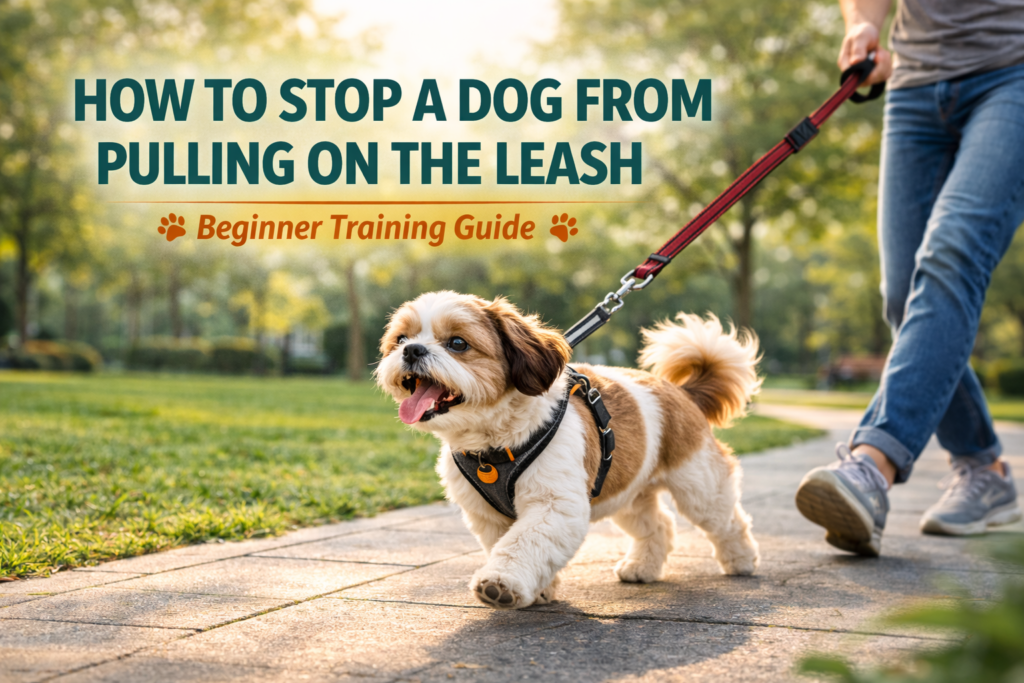
Leash Pulling
Dogs pull because they are excited or not trained properly.
To fix this, follow how to stop a dog from pulling on the leash for step-by-step guidance.
Anxiety and Stress
Some dogs show signs of anxiety such as barking, pacing, or destructive behavior.
You can manage this with structured routines and training. Learn more in how to calm an anxious dog.
Boredom
Dogs need mental stimulation as much as physical exercise.
Signs of boredom include:
- chewing furniture
- restlessness
- attention-seeking
If you notice these, check signs your dog is bored and what to do.
You can also try best indoor activities for dogs to keep them engaged.
Step 7: Use Crate Training the Right Way
Crate training helps create a safe space for your dog.
Benefits include:
- easier house training
- reduced anxiety
- better sleep routines
It should never be used as punishment.
Follow the crate training guide for beginners to do it correctly.
Puppy Training vs Adult Dog Training
Training differs slightly depending on your dog’s age.
Puppies
- learn quickly
- get distracted easily
- need short sessions
Start early with how to socialize a puppy safely to build confidence.
Adult Dogs
- take longer to adjust
- can still learn effectively
- need consistency
It’s never too late to train a dog.
How Long Does It Take to Train a Dog?
Training is a gradual process.
Typical timeline:
- Week 1–2 → basic commands
- Week 3–4 → improved consistency
- 2–3 months → stable behavior
Some dogs learn faster, others take more time. Consistency is the key factor.
Sample Daily Training Schedule
Here is a simple routine you can follow:
Morning
- short walk
- basic commands
Afternoon
- playtime or mental activity
Evening
- short training session
- calm walk
This balanced approach helps reinforce learning.
How Diet Affects Training
Your dog’s diet plays a bigger role than you might expect.
A balanced diet helps:
- maintain energy levels
- improve focus
- support learning
For proper feeding, refer to dog feeding chart by weight.
Common Training Mistakes to Avoid
Avoid these common mistakes:
- inconsistent commands
- long training sessions
- lack of routine
- ignoring small issues
- using punishment
Fixing these early makes training easier.
When to Seek Help
If your dog shows severe behavior issues such as:
- aggression
- extreme fear
- uncontrollable behavior
You may need professional help.
Early intervention prevents long-term problems.
Final Thoughts
Dog training is not about perfection—it’s about consistency and progress. By following simple steps, building routines, and addressing behavior early, you can raise a well-behaved and confident dog. Grooming becomes easier with structure and consistency—this dog hygiene and grooming guide for everyday care explains how routines help.
Start small, stay consistent, and gradually build on your dog’s learning. Over time, training becomes part of daily life rather than a separate task.
Frequently Asked Questions
Yes, dogs can learn at any age with patience.
Short sessions 2–3 times a day work best.
“Sit” is usually the easiest starting point.
Possible reasons include:
lack of consistency
distractions
insufficient rewards

About the Author
Hi, I’m Sonuraj, the creator of PetInfoGuide.com.
I’m a passionate dog owner and pet care enthusiast who has spent years learning about dog health, nutrition, and behavior through hands-on experience and continuous research. Like many pet owners, I started my journey with simple questions—what to feed, how to train, and how to keep my dog healthy. Over time, this curiosity turned into a deep interest in understanding what really works for everyday dog care.
PetInfoGuide.com was created to simplify dog care for beginners. The goal is to provide clear, practical, and easy-to-follow information that helps dog owners make better decisions for their pets. Every article is written with a focus on real-life situations—feeding routines, common health issues, training basics, and daily care.
I regularly research trusted sources, veterinary recommendations, and widely accepted pet care practices to ensure the information shared is accurate and helpful. While this site does not replace professional veterinary advice, it is designed to guide dog owners in understanding common problems and knowing when to seek expert help.
What you can expect from my content:
- Simple, beginner-friendly explanations
- Practical solutions you can apply immediately
- Structured guides based on real pet care needs
- Honest and research-backed information
As a pet owner myself, I understand the responsibility that comes with caring for a dog. This website is built to support you in that journey—whether you are raising a puppy or caring for an adult dog.
If you have questions or suggestions, feel free to reach out through the Contact page.
This content is for informational purposes only and is not intended to replace professional veterinary advice, diagnosis, or treatment. Always consult a qualified veterinarian or animal care professional regarding your pet’s health, routine, or dietary needs.

Pingback: How to Socialize a Puppy Safely Beginner Guide - PetInfoGuide