
Dog Training Basics: Simple Commands Every Dog Should Learn
Training is one of the most important foundations of responsible dog ownership. While many people focus on food, grooming, and exercise, structured training builds communication and routine between a dog and its owner.
Understanding dog training basics helps create a calm, predictable environment. Moreover, basic commands improve safety, build confidence, and strengthen the bond between you and your dog.
Training does not require advanced techniques. Instead, it starts with simple, consistent habits. Training works best when part of a daily plan. Read How to Build a Daily Routine for Your Dog.
What Are Dog Training Basics?
Dog training basics refer to teaching simple, foundational commands that help improve communication, safety, and behavior.
These commands usually include:
Sit
Stay
Come
Down
Leave It
Heel
No
Basic training focuses on consistency, patience, and repetition rather than complexity. Early exposure also supports learning, which is why proper guidance on How to Socialize a Puppy Safely can improve training outcomes.
Why Basic Training Is Important for Every Dog
Basic commands are not just about obedience. Instead, they help create structure.
Training can:
Improve safety during walks
Reduce indoor chaos
Strengthen focus
Build trust between dog and owner
Support social interactions
For example, a reliable “come” command can prevent dangerous situations outdoors. Similarly, “leave it” can stop unwanted behavior before it escalates.
Training works best when it becomes part of your overall care routine, as explained in our Dog Care: Complete Guide for Everyday Owners.
When Should You Start Training a Dog?
Training can begin as soon as a puppy settles into its new home. However, adult dogs can learn new commands too.
In general:
Puppies learn through short, playful sessions
Adult dogs benefit from consistent repetition
Senior dogs can still learn basic reinforcement commands
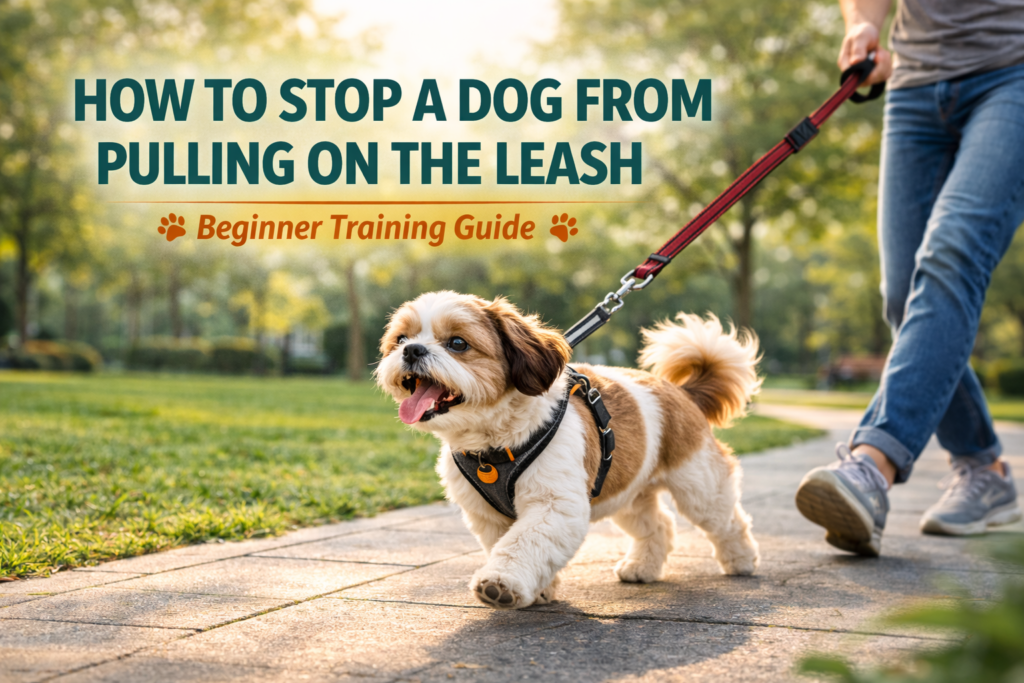
Age does not prevent learning — consistency matters more. For practical leash behavior solutions, see How to Stop a Dog from Pulling on the Leash.
7 Simple Commands Every Dog Should Learn
Let’s break down the essential commands for beginners.
1. Sit
“Sit” is often the first command taught.
Why it matters:
Encourages calm behavior
Builds focus
Creates a foundation for other commands
Reward immediately when your dog successfully sits.
2. Stay
“Stay” teaches patience and impulse control.
Start with short durations, then gradually increase time. Keep sessions positive and calm.
3. Come
“Come” is one of the most important safety commands.
Practice in low-distraction environments before trying outdoors.
4. Down
“Down” encourages relaxed behavior and can reduce jumping or overexcitement.
Use gentle cues and reward calm positioning.
5. Leave It
This command prevents unwanted grabbing or chewing.
It is especially helpful during walks and outdoor exploration.
6. Heel
“Heel” teaches your dog to walk calmly beside you.
This connects directly with your walking routine. For structured leash guidance, see our Dog Walking Tips for Beginners.
7. No
Used consistently and calmly, “No” helps communicate boundaries.
Avoid yelling. Clear tone and consistency work better than volume.
Step-by-Step Beginner Training Routine
Training works best when structured.
Step 1: Choose One Command at a Time
Avoid overwhelming your dog.
Step 2: Keep Sessions Short
5–10 minutes is often enough.
Step 3: Use Positive Reinforcement
Reward correct behavior immediately.
Step 4: Practice Daily
Consistency creates reliability.
Step 5: Gradually Add Distractions
Increase difficulty slowly.
Small progress builds lasting results.
Crate training can support daily routines and house training. Learn how in Crate Training Guide for Beginners.
Common Dog Training Mistakes to Avoid
Beginners often make small errors.
Avoid:
Inconsistent commands
Long training sessions
Lack of patience
Overuse of treats
Skipping daily practice
Training should feel structured, not stressful.
How Training Supports Daily Exercise and Routine
Training is not separate from daily care. Instead, it complements exercise and routine.
For example:
Training during walks reinforces focus
Mental stimulation reduces excess energy
Structured routines improve calmness
For a broader understanding of activity levels, see How Much Exercise Does a Dog Need Each Day?
When combined with consistent walking and feeding routines, training creates balance.
How Long Should Training Sessions Be?
Most beginner training sessions should last 5–15 minutes.
Short sessions:
Maintain attention
Prevent frustration
Encourage steady progress
Multiple short sessions per day often work better than one long session.
Frequently Asked Questions
What are dog training basics?
Dog training basics include teaching foundational commands like sit, stay, come, and heel to improve communication and safety.
How long does it take to train a dog?
Progress depends on consistency. Many dogs respond to basic commands within a few weeks of daily practice.
Is it harder to train older dogs?
Older dogs can still learn effectively with patience and repetition.
Should training happen every day?
Yes. Short, consistent sessions are more effective than occasional long sessions.
Final Thoughts
Learning dog training basics builds communication and stability. Training does not need to be complicated. Instead, it requires consistency, patience, and realistic expectations.
When combined with exercise, walking routines, and structured feeding, training becomes part of a complete care system.
Small daily efforts create long-term behavior improvements.
Disclaimer
This article is for general informational purposes only and does not replace professional training or behavioral consultation if needed.

Pet Care & Dog Training Expert – PetInfoGuide Pet care writer sharing expert dog training tips, puppy guides, cat care advice, and practical pet health information for responsible pet owners.
PetInfoGuide Editorial Team provides well-researched and practical pet care advice based on trusted sources and real-world experience. Our goal is to help pet owners make informed decisions about their pets’ health, nutrition, and daily care.
This content is for informational purposes only and is not intended to replace professional veterinary advice, diagnosis, or treatment. Always consult a qualified veterinarian or animal care professional regarding your pet’s health, routine, or dietary needs.

Pingback: How Much Exercise Does a Dog Need Each Day? A Simple Guide
Pingback: Dog Walking Tips for Beginners: How to Build a Healthy Routine -
Pingback: How to Stop a Dog from Pulling on the Leash: A Beginner’s Guide -
Pingback: How to Socialize a Puppy Safely Beginner Guide - PetInfoGuide
Pingback: Best Indoor Activities for Dogs 10 Fun Mental Stimulation Ideas
Pingback: Healthy Dog Treats: How Often and How Much to Give - PetInfoGuide
Pingback: How to Build a Daily Dog Routine for Your Dog (Healthy & Happy Pets Guide)
Pingback: Dog Care: Complete Guide for Everyday Owners - PetInfoGuide