
Crate Training for Beginners: How to Crate Train a Puppy Without Stress
When I first brought Alex home, I had heard plenty of opinions about crate training.
Some people told me that a crate was essential for raising a puppy. Others made it sound like putting a puppy in a crate was cruel.
As a first-time dog owner, I wasn’t sure what to believe.
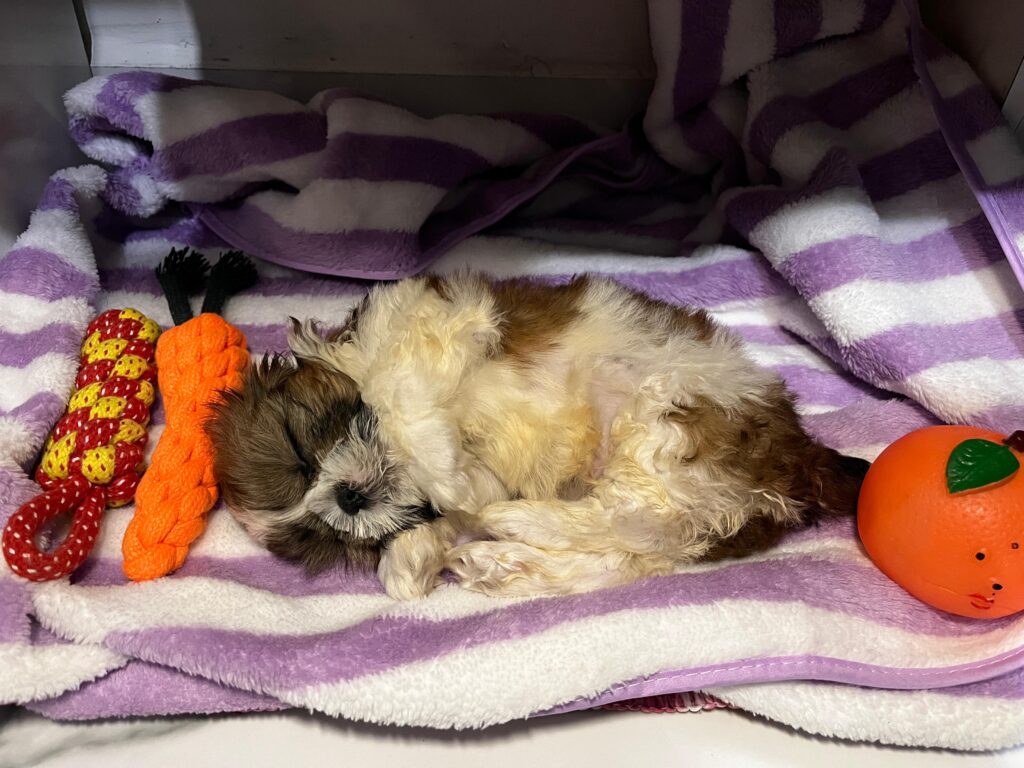
What I eventually learned is that crate training isn’t about locking a puppy away or using a crate as punishment. When introduced properly, a crate can become a comfortable, predictable place where a puppy can rest, sleep, and feel secure.
In this guide, I’ll explain what I learned about crate training, how to introduce a puppy to a crate, how crate training can support potty training, common mistakes to avoid, and how to make the process easier for both you and your puppy.
What Is Crate Training?
Crate training is the process of teaching your puppy to feel comfortable spending appropriate periods of time in a crate.
The goal isn’t simply to get your puppy to stay inside.
The real goal is for your puppy to see the crate as a safe and familiar space.
A properly introduced crate can become a place where your dog:
- Sleeps
- Takes naps
- Rests after play
- Settles down when the house is busy
- Travels safely
- Has some quiet time
It should never be used as a place to punish your puppy.
Why I Decided to Use a Crate With Alex
When Alex was a puppy, I quickly realized that giving him complete freedom around the house wasn’t always practical.
Puppies are curious.
They want to investigate everything, chew things they shouldn’t, and explore every corner of the house.
A crate gave me a way to create a safe space while also helping me manage his daily routine.
It was especially useful when I couldn’t watch him every second.
But I also learned an important lesson:
A crate is a management tool, not a replacement for training, exercise, attention, or companionship.
Choosing the Right Crate for Your Puppy
One of the first decisions you’ll need to make is choosing an appropriate crate.
The crate should be large enough for your puppy to:
- Stand comfortably
- Turn around
- Lie down
- Stretch and change position
But you don’t necessarily want an excessively large crate for a young puppy.
Some crates come with adjustable dividers, allowing you to increase the available space as your puppy grows.
For a small breed such as a Shih Tzu, choosing the right size is particularly important because you don’t want to buy a crate that is unnecessarily large.
Where Should You Put the Crate?
Location matters more than many new owners realize.
I would choose a quiet area where your puppy can still see and hear the family.
Putting the crate completely away from everyone can make a puppy feel isolated.
At the same time, placing it in the busiest part of the house may make it difficult for your puppy to settle.
A good location should provide:
- Reasonable visibility of the family
- Good ventilation
- Protection from direct heat or harsh sunlight
- A relatively calm environment
- Enough space for you to open and close the crate safely
How to Introduce a Puppy to a Crate
Don’t rush this part.
One of the biggest mistakes a new owner can make is putting a puppy into a crate, closing the door immediately, and expecting them to love it.
Instead, introduce the crate gradually.
Step 1: Let Your Puppy Investigate
Place the crate somewhere appropriate and leave the door open.
Let your puppy sniff it and investigate it at their own pace.
You don’t need to force them inside.
Step 2: Make the Crate Interesting
You can place an appropriate toy or reward near the entrance.
Once your puppy becomes comfortable, you can gradually encourage them to move farther inside.
The idea is to create positive associations.
Step 3: Reward Calm Behavior
Whenever your puppy willingly enters the crate or settles calmly inside, offer praise or an appropriate reward.
Your puppy begins learning:
Crate = good things happen here.
Step 4: Practice With the Door Open
Allow your puppy to spend short periods inside while the door remains open.
This gives them an opportunity to relax without feeling trapped.
Step 5: Briefly Close the Door
Once your puppy is comfortable entering the crate, you can begin closing the door for very short periods.
Stay nearby.
Open the door again before your puppy becomes extremely distressed.
Gradually build duration based on how your individual puppy responds.
Crate Training a Puppy at Night
Nighttime crate training can be one of the most challenging parts for new puppy owners.
Your puppy has just left their mother and littermates and is suddenly sleeping somewhere completely new.
It’s normal for the first few nights to feel difficult.
Before bedtime, create a predictable routine.
For example:
Play → calm down → potty break → crate → sleep
Taking your puppy to their designated potty area before bedtime is particularly important.
If your puppy wakes during the night and appears to need a bathroom break, take them out calmly.
Keep the trip boring.
No exciting games.
No long play session.
After the potty break, return to the sleeping routine.
How Crate Training Helps With Potty Training
Crate training and potty training can work together, but the crate isn’t a substitute for regular bathroom breaks.
Young puppies have limited bladder control.
They still need frequent opportunities to eliminate.
A useful routine might look like:
Wake up → potty → play → potty → rest in crate
Then:
Wake up → potty → meal → potty → supervised activity
This creates predictable patterns.
I’ve found that the more predictable the routine becomes, the easier it is for a puppy to understand what happens next.
For a more detailed schedule, see our Dog Potty Training guide.
How Long Can a Puppy Stay in a Crate?
There isn’t one number that applies to every puppy.
Age, development, health, previous training, and individual tolerance all matter.
A crate should not be used as a convenient way to leave a puppy confined for most of the day.
Puppies need:
- Bathroom breaks
- Exercise
- Social interaction
- Training
- Mental stimulation
- Sleep
- Time with their family
Think of the crate as one part of a healthy daily routine.
Not the routine itself.
What If My Puppy Cries in the Crate?
This is probably one of the biggest questions new owners have.
A puppy may whine or cry because:
- They need to go potty
- They’re uncomfortable
- They’re frightened
- They’re adjusting to the new environment
- They want attention
- They’re overtired
- They’re not yet comfortable with the crate
Don’t immediately assume that crying means your puppy hates the crate.
First, check whether there is a legitimate need.
Does your puppy need a bathroom break?
Are they too hot or cold?
Have they had enough exercise?
Have you introduced the crate too quickly?
Understanding the reason behind the behavior is more useful than simply trying to stop the noise.
Should You Let a Puppy Cry in the Crate?
There isn’t a single approach that works for every puppy.
What I would avoid is intentionally making a puppy extremely distressed and leaving them there for long periods.
Instead, focus on gradual crate training.
Make the crate positive.
Keep early sessions short.
Stay nearby.
Increase the duration gradually.
If your puppy becomes highly distressed, reassess your approach rather than simply increasing the amount of time they spend confined.
Crate Training Mistakes to Avoid
Using the Crate as Punishment
Never make the crate the place your puppy gets sent because they did something wrong.
You want your puppy to feel safe there.
Leaving the Puppy Inside for Too Long
A crate isn’t a substitute for exercise, interaction, and bathroom breaks.
Moving Too Quickly
If your puppy is comfortable staying inside for two minutes, that doesn’t automatically mean they’re ready for an hour.
Build duration gradually.
Forcing the Puppy Inside
Dragging or pushing your puppy into the crate can create negative associations.
Encourage them instead.
Making Every Crate Session Mean You Are Leaving
If the only time your puppy goes into the crate is when you leave the house, they may start associating the crate with being alone.
Practice short crate sessions while you’re still at home.
Ignoring Your Puppy’s Needs
Before assuming your puppy is simply being difficult, check whether they need food, water, a potty break, exercise, or attention.
How to Make a Puppy Love Their Crate
You don’t need complicated techniques.
Focus on creating positive experiences.
You can:
- Feed appropriate meals near or inside the crate when suitable
- Offer safe, appropriate toys
- Reward calm behavior
- Allow your puppy to enter voluntarily
- Keep the crate comfortable
- Practice short sessions
- Maintain a predictable routine
Over time, the crate can become a familiar resting place rather than something your puppy fears.
Can You Leave Toys in a Puppy Crate?
Some appropriate toys can help keep a puppy occupied, but safety should come first.
Avoid leaving anything that could easily break apart, become a choking hazard, or be swallowed.
If you’re unsure whether a particular toy is appropriate for unsupervised use, ask your veterinarian or another qualified pet professional.
Crate Training When You Leave the House
Once your puppy is comfortable with the crate, you can gradually practice short periods of separation.
Don’t make leaving or returning a dramatic event.
Keep your routine calm.
Start with short periods and gradually increase them according to your puppy’s comfort and needs.
If your puppy becomes extremely distressed whenever you leave, don’t simply assume they need a longer crate session.
Separation-related problems may require a different training approach and professional guidance.
Crate Training a Shih Tzu Puppy
Shih Tzus are companion dogs, and many become very attached to their owners.
That can make teaching independence particularly important.
With Alex, I learned that crate training wasn’t about making him spend less time with me.
It was about teaching him that he could also relax comfortably on his own.
That distinction made the whole process feel much more positive.
A Simple Puppy Crate Training Routine
Here’s an example of how crate training can fit into a normal day:
Morning
Wake up → potty break → breakfast → potty break → play
Mid-Morning
Supervised activity → potty break → short crate rest
Afternoon
Wake up → potty → play → training → rest
Evening
Dinner → potty → family time → calm activity
Bedtime
Final potty break → crate → sleep
Your puppy’s actual schedule will depend on age, sleep needs, feeding routine, and your household.
The important thing is consistency.
Crate Training and Your Puppy’s Daily Routine
Crate training becomes much easier when it is connected to the rest of your puppy’s routine.
For example, feeding at consistent times can make potty breaks more predictable.
Exercise and play can help your puppy settle before rest.
Potty breaks can happen after waking and meals.
If you’re interested in Alex’s feeding routine, see What My Shih Tzu Eats in a Day.
For a broader overview of puppy care, you can also read My First 30 Days With My Shih Tzu Puppy.
What I Learned From Crate Training Alex
The biggest lesson I learned was that crate training requires patience.
There were moments when I expected Alex to understand something immediately.
But puppies don’t work like that.
They learn through repetition.
One day can seem like a huge success, while the next day feels like a setback.
That’s normal.
The goal is to create positive experiences and gradually build confidence.
Once I stopped thinking about crate training as something that needed to be completed quickly, I became much more patient with the process.
Frequently Asked Questions
Is crate training good for puppies?
A properly sized and appropriately introduced crate can be a useful management and training tool. It should provide a comfortable space for rest rather than being used as punishment or prolonged confinement.
How long does crate training take?
It varies from puppy to puppy. Some become comfortable quickly, while others need a much slower introduction. Consistency and gradual progression are more important than trying to meet a specific deadline.
Should I put food in my puppy’s crate?
Food can sometimes be used as part of positive crate training, depending on the puppy and the situation. The goal is to create positive associations rather than force the puppy inside.
Should a puppy sleep in a crate?
A crate can be part of a puppy’s nighttime routine if the puppy is comfortable with it and the crate is appropriately set up. Young puppies may still need overnight potty breaks.
Can crate training help with potty training?
Yes, crate training can help with management and establishing a predictable routine, but puppies still need frequent potty opportunities. A crate should never be used as a substitute for regular bathroom breaks.
What should I do if my puppy hates the crate?
Go back a step. Keep sessions shorter, make the crate more positive, stay nearby, and avoid forcing your puppy inside. If your puppy shows significant distress, consider speaking with a qualified trainer or veterinarian.
Final Thoughts
Crate training doesn’t need to be stressful.
The biggest mistake is expecting a puppy to understand the crate immediately.
Give them time.
Let them investigate it.
Reward positive behavior.
Keep sessions short in the beginning.
Connect crate time with rest and positive experiences.
And most importantly, never use the crate as punishment.
For me, crate training became much easier once I understood that I wasn’t simply teaching Alex to stay inside a box.
I was teaching him that he had his own safe place to relax.
That small change in perspective made a big difference.
A puppy doesn’t need a perfect owner.
They need someone who is patient, consistent, and willing to learn alongside them.

Pet Care & Dog Training Expert – PetInfoGuide Pet care writer sharing expert dog training tips, puppy guides, cat care advice, and practical pet health information for responsible pet owners.
PetInfoGuide Editorial Team provides well-researched and practical pet care advice based on trusted sources and real-world experience. Our goal is to help pet owners make informed decisions about their pets’ health, nutrition, and daily care.
This content is for informational purposes only and is not intended to replace professional veterinary advice, diagnosis, or treatment. Always consult a qualified veterinarian or animal care professional regarding your pet’s health, routine, or dietary needs.

Pingback: How I Stopped My Shih Tzu Puppy From Biting: What Actually Helped - PetInfoGuide