
What to Give a Dog for Upset Stomach and Vomiting
When a dog has an upset stomach and starts vomiting, it can be stressful for any pet owner. In many cases, digestive upset happens suddenly and leaves owners unsure about what to do next—especially when it comes to feeding.
This article explains what to give a dog for upset stomach and vomiting using commonly followed, gentle care practices. The information shared here is meant for mild, short-term digestive upset only and focuses on comfort and observation, not treatment.
Understanding Upset Stomach and Vomiting in Dogs
An upset stomach in dogs can happen for several everyday reasons. Sometimes it’s caused by eating something unfamiliar, a sudden change in food, stress, or scavenging. Vomiting is the body’s way of trying to clear irritation from the stomach.
In mild cases, the digestive system may simply need time to settle. This is why feeding adjustments are often focused on resting the stomach rather than introducing rich or complex foods.
First Step: Let the Stomach Rest
If your dog has vomited, the first step is usually to pause feeding for a short period. This brief break allows the stomach to calm down.
During this time:
Avoid offering food immediately
Allow access to fresh water
Offer small sips if your dog is interested
Do not force food if vomiting has just occurred. If vomiting continues even after drinking water, feeding should be stopped and professional advice should be sought.
What to Give a Dog With an Upset Stomach (After Vomiting Stops)
Once vomiting slows or stops, many owners introduce bland, easy-to-digest food in small amounts.
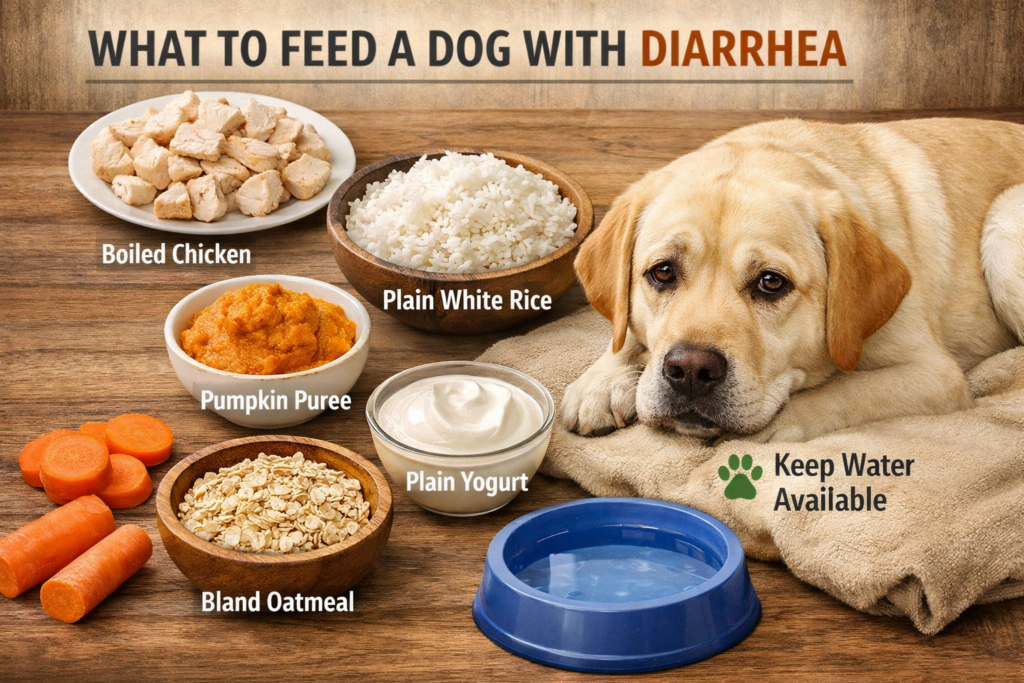
Plain Cooked White Rice
Plain white rice is commonly used because it is gentle on the digestive system.
Fully cooked
No salt, oil, butter, or seasoning
Plain Cooked Lean Protein
This is often paired with rice:
Boiled chicken without skin or bones
Cooked thoroughly
No spices or flavoring
Meals should be small and offered gradually to avoid overwhelming the stomach.
How to Feed During Digestive Upset
Knowing how to feed is just as important as knowing what to feed.
Helpful feeding tips include:
Offer small portions
Feed more frequently rather than large meals
Stick to the same bland food during recovery
Observe stool and energy levels closely
If your dog shows interest in food and keeps it down, this is usually a positive sign.
Foods to Avoid Until Recovery
Certain foods can worsen stomach irritation and should be avoided until your dog is fully recovered.
Avoid:
Dairy products
Fatty or oily foods
Treats and table scraps
Spicy or seasoned food
Sudden food changes
If you’re wondering what not to give a dog with an upset stomach, the safest approach is to keep meals plain and simple.
Hydration Matters
Vomiting can lead to fluid loss, so hydration is important.
Make sure clean water is always available
Encourage small, frequent sips
Watch for signs of dehydration such as low energy or dry gums
If your dog cannot keep water down, this requires professional attention.
When Home Care Is Not Enough
Home feeding adjustments are not appropriate for all situations.
Contact a veterinarian if:
Vomiting lasts more than 24 hours
Vomiting happens repeatedly
There is blood in vomit
Vomiting is combined with diarrhea
Your dog becomes weak or lethargic
A puppy or senior dog is affected
These signs suggest that professional evaluation is needed.
Frequently Asked Questions
Can dogs eat rice after vomiting?
Plain, cooked white rice is commonly used once vomiting has stopped and food is reintroduced slowly.
How long should I wait before feeding after vomiting?
Many owners wait several hours after vomiting stops before offering small amounts of bland food.
Can treats be given during stomach upset?
Treats are best avoided until digestion returns to normal.
Final Thoughts
Understanding what to give a dog for upset stomach and vomiting can help support comfort during mild digestive upset. Keeping meals simple, feeding small portions, and monitoring your dog closely are key steps. Always seek professional guidance if symptoms persist or worsen.
Disclaimer
This article is for general informational purposes only and does not replace professional veterinary advice. If vomiting continues, worsens, or is accompanied by other symptoms, consult a qualified veterinarian.

Pet Care & Dog Training Expert – PetInfoGuide Pet care writer sharing expert dog training tips, puppy guides, cat care advice, and practical pet health information for responsible pet owners.
PetInfoGuide Editorial Team provides well-researched and practical pet care advice based on trusted sources and real-world experience. Our goal is to help pet owners make informed decisions about their pets’ health, nutrition, and daily care.
This content is for informational purposes only and is not intended to replace professional veterinary advice, diagnosis, or treatment. Always consult a qualified veterinarian or animal care professional regarding your pet’s health, routine, or dietary needs.
Pingback: Dog Care: Complete Guide for Everyday Owners - PetInfoGuide
Pingback: Bland Diets for Dogs: A Clear Guide for Digestive Relief
Pingback: Dog Nutrition Basics: Feeding & Routine Guide for Owners -