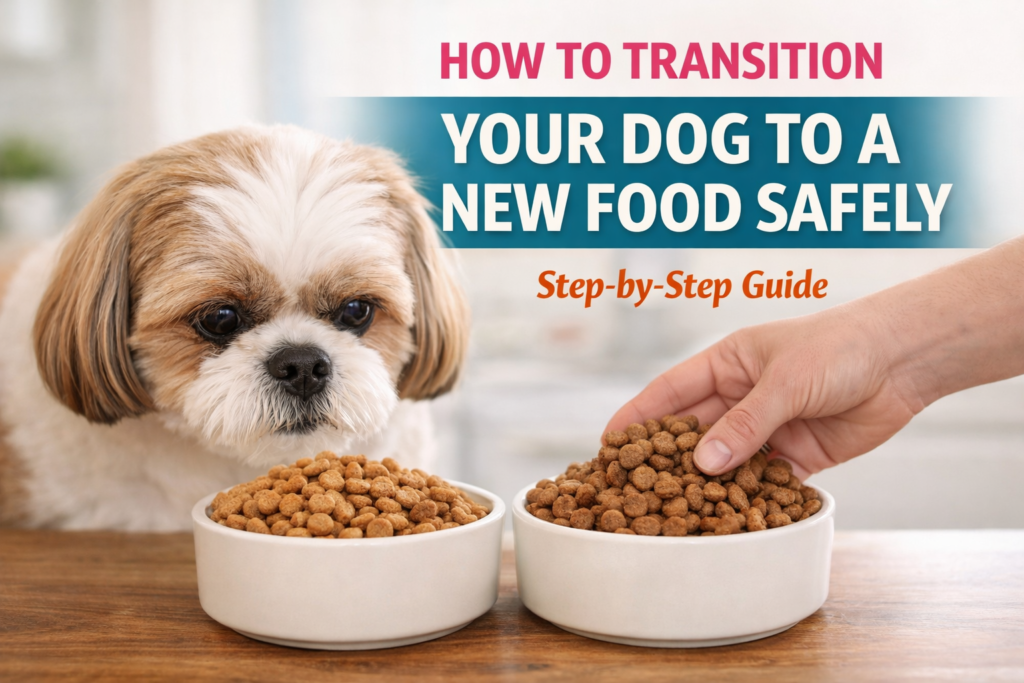
How to Transition Your Dog to a New Food Safely
Changing your dog’s food may seem simple, but doing it too quickly can lead to digestive issues such as diarrhea, vomiting, or loss of appetite. Many dog owners switch food brands or types without realizing that a gradual transition is essential for maintaining digestive balance.
Learning how to transition your dog to a new food safely helps prevent stomach upset and ensures your dog adapts comfortably to the new diet. With the right approach, you can make the switch smoothly while keeping your dog healthy and happy.
Why Transitioning Dog Food Gradually Is Important
Dogs have sensitive digestive systems that adjust slowly to new ingredients.
A gradual transition allows your dog’s digestive system to adapt without stress.
When food is changed suddenly:
- gut bacteria are disrupted
- digestion becomes unstable
- symptoms like diarrhea or vomiting may occur
A slow transition helps maintain digestive balance and reduces the risk of discomfort.
Signs Your Dog Needs a Food Change
There are several reasons why you may need to switch your dog’s food.
Common signs include:
- low energy levels
- dull coat
- digestive issues
- loss of appetite
- food intolerance
Sometimes, switching food is part of a routine adjustment, such as moving from puppy food to adult food.
In all cases, the transition should be gradual and controlled.
How to Transition Your Dog to a New Food (Step-by-Step Guide)
The safest way to switch dog food is over 7–10 days.
Day 1–2: Introduce Small Amount
- 75% old food
- 25% new food
This allows your dog to taste the new food without overwhelming the digestive system.
Day 3–4: Increase the New Food
- 50% old food
- 50% new food
At this stage, monitor your dog for any signs of discomfort.
Day 5–6: Mostly New Food
- 25% old food
- 75% new food
Your dog should now be adjusting to the new food.
Day 7+: Fully Transitioned
- 100% new food
If your dog shows no digestive issues, the transition is complete.
Common Mistakes When Switching Dog Food
Many owners unknowingly make mistakes during food transitions.
Avoid:
- switching food suddenly
- ignoring digestive symptoms
- mixing incompatible foods
- overfeeding during transition
- changing food too frequently
Consistency and patience are key.
What to Do If Your Dog Gets an Upset Stomach
Sometimes, even with a gradual transition, mild digestive upset can occur.
Signs include:
- loose stools
- reduced appetite
- mild discomfort
If this happens:
- slow down the transition
- return to the previous ratio
- monitor hydration
In some cases, feeding adjustments like those explained in What to Feed a Dog With Diarrhea can help support recovery.
If symptoms persist, consult a veterinarian.
Tips for a Smooth Dog Food Transition
To make the process easier:
- maintain a consistent feeding schedule
- introduce new food gradually
- avoid giving too many treats during transition
- monitor your dog’s behavior and digestion
Choosing the right portions also helps. For structured feeding guidance, refer to Dog Feeding Schedule by Age.
How Food Transition Fits Into Your Dog’s Daily Routine
Food changes should align with your dog’s overall routine.
A balanced daily routine includes:
- regular feeding times
- controlled treat intake
- consistent exercise
For example, excessive treats may affect appetite during transition. Learn more in Healthy Dog Treats: How Often and How Much to Give.
Similarly, maintaining a structured routine as explained in Dog Care: Complete Guide for Everyday Owners helps your dog adapt more easily to dietary changes.
Everything works together.
Frequently Asked Questions
How long does it take to transition dog food?
Most dogs adjust within 7–10 days when transitioned gradually.
Can I switch dog food immediately?
No. Sudden changes can cause digestive upset. A gradual transition is recommended.
What are signs of a bad food transition?
Common signs include diarrhea, vomiting, and loss of appetite.
Should I stop treats during transition?
It is best to limit treats to avoid digestive overload.
Final Thoughts
Understanding how to transition your dog to a new food safely is essential for maintaining your dog’s digestive health. A slow and structured approach helps prevent discomfort and ensures your dog adapts smoothly to the new diet.
By following a gradual transition plan and maintaining a consistent routine, you can make dietary changes stress-free for your dog.
Small steps lead to better long-term health.
Disclaimer
This article is for informational purposes only and does not replace professional veterinary advice.