
Bland Diets for Dogs: A Clear Guide for Digestive Relief
When dogs experience mild digestive upset, many of us as a pet owners hear the term “bland diet” but aren’t always sure what it means or when it’s appropriate. A bland diet is often discussed as a short-term feeding approach designed to support digestion during temporary stomach discomfort.
This article explains what a bland diet for dogs is, when it’s commonly used, and how it fits into everyday dog care. The goal is to provide clear, general information—not to diagnose or treat health conditions.
What Is a Bland Diet for Dogs?
A bland diet for dogs refers to simple, easy-to-digest foods that are low in fat and free from seasoning. These foods are typically chosen because they are gentle on the stomach and less likely to irritate the digestive system.
Unlike regular meals, a bland diet is:
Temporary
Simple in ingredients
Used to support digestion during mild upset
It is not intended to replace a dog’s regular diet long-term. Please ensure you also read about the Dog Nutrition Basics: Feeding & Routine Guide for Owners.
Why Bland Diets Are Used for Dogs
Dogs can experience digestive discomfort for many everyday reasons. Sometimes it’s caused by a sudden food change, eating something unfamiliar, stress, or minor stomach sensitivity.
In these situations, a bland diet may be used to:
Reduce strain on digestion
Give the stomach time to settle
Provide basic nourishment without irritation
It’s important to understand that a bland diet supports comfort, but it does not address the underlying cause of digestive issues.
Common Foods Used in a Bland Diet
A bland diet typically includes very simple foods that are widely known for being gentle on digestion.
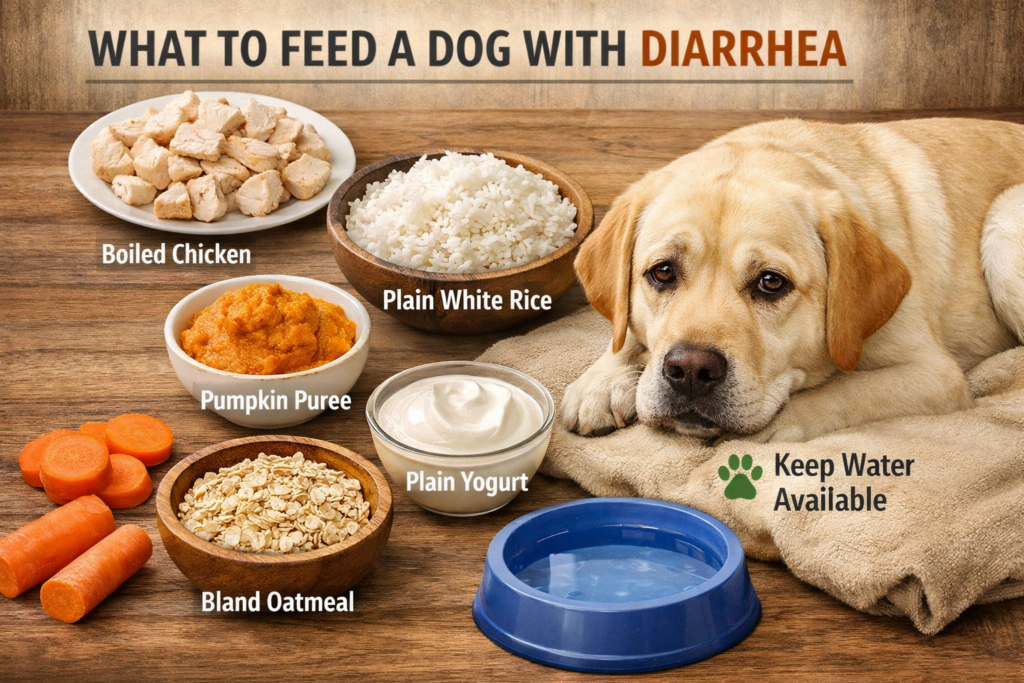
Plain Cooked White Rice
White rice is commonly used because:
It is easy to digest
It is low in fat
It helps provide energy without heaviness
The rice should be:
Fully cooked
Plain (no salt, oil, or seasoning)
Plain Cooked Lean Protein
Lean protein is often paired with rice.
Commonly used options include:
Boiled chicken (skinless and boneless)
The protein should be:
Cooked thoroughly
Unseasoned
Served in small portions
These foods are chosen for simplicity, not because they are “special” or curative.
When a Bland Diet Is Commonly Used
A bland diet for dogs is usually considered during short-term digestive upset.
Common situations where owners may use a bland diet include:
Mild diarrhea
Mild vomiting after it has stopped
Temporary stomach upset
Transitioning back to regular food after digestive discomfort
If your dog is experiencing digestive issues, you may also find these related guides helpful:
These articles explain feeding adjustments in more detail.
How Long a Bland Diet Is Typically Used
A bland diet is generally short-term only.
Key points to remember:
It is not meant to be fed indefinitely
Once digestion improves, food should be transitioned gradually
Sudden changes back to regular food may cause upset to return
Most owners slowly reintroduce regular food by mixing small amounts with the bland diet over several days.
How to Feed a Bland Diet Properly
How you feed matters just as much as what you feed.
Helpful feeding tips include:
Offer small portions
Feed more frequently rather than large meals
Stick to the same bland food during this period
Ensure fresh water is always available
Observation is important. Monitor stool consistency, appetite, and energy levels.
Mistakes to Avoid When Using a Bland Diet
Using a bland diet incorrectly can reduce its usefulness.
Common mistakes include:
Adding seasoning or flavoring
Feeding large portions too quickly
Extending the bland diet longer than needed
Mixing multiple new foods together
Treating it as a permanent diet
A bland diet works best when kept simple and temporary.
Can a Bland Diet Be Used for All Dogs?
Not every dog should be managed at home.
Extra caution is needed for:
Puppies
Senior dogs
Dogs with ongoing health concerns
If digestive issues persist, worsen, or are accompanied by other symptoms such as lethargy or refusal to drink water, professional guidance is important.
How a Bland Diet Fits Into Overall Dog Care
Digestive care is only one part of everyday dog care. Feeding routines, grooming habits, exercise, and observation all work together to support a dog’s wellbeing.
For a broader overview of daily routines, see:
This pillar guide explains how feeding fits into overall care.
Frequently Asked Questions
What is a bland diet for dogs?
A bland diet for dogs consists of simple, easy-to-digest foods used temporarily to support mild digestive upset.
Can a bland diet be used long term?
No. A bland diet is not nutritionally complete for long-term feeding and should only be used temporarily.
Can dry dog food be mixed with a bland diet?
When transitioning back to regular food, small amounts of dry food are often mixed gradually rather than switched suddenly.
Is a bland diet a treatment?
No. A bland diet supports digestion but does not treat or cure underlying conditions.
Final Thoughts
Understanding what a bland diet for dogs is and when it’s used can help pet owners make calm, informed decisions during mild digestive upset. Keeping food simple, feeding small portions, and monitoring your dog closely are key parts of short-term digestive support.
This approach is meant to support comfort—not replace professional care when it’s needed.
Disclaimer
Disclaimer:
This article is for general informational purposes only and does not replace professional veterinary advice. A bland diet is intended for short-term digestive support only. If your dog’s symptoms persist, worsen, or are accompanied by other signs such as vomiting, lethargy, or loss of appetite, consult a qualified veterinarian.

About the Author
Hi, I’m Sonuraj, the creator of PetInfoGuide.com.
I’m a passionate dog owner and pet care enthusiast who has spent years learning about dog health, nutrition, and behavior through hands-on experience and continuous research. Like many pet owners, I started my journey with simple questions—what to feed, how to train, and how to keep my dog healthy. Over time, this curiosity turned into a deep interest in understanding what really works for everyday dog care.
PetInfoGuide.com was created to simplify dog care for beginners. The goal is to provide clear, practical, and easy-to-follow information that helps dog owners make better decisions for their pets. Every article is written with a focus on real-life situations—feeding routines, common health issues, training basics, and daily care.
I regularly research trusted sources, veterinary recommendations, and widely accepted pet care practices to ensure the information shared is accurate and helpful. While this site does not replace professional veterinary advice, it is designed to guide dog owners in understanding common problems and knowing when to seek expert help.
What you can expect from my content:
- Simple, beginner-friendly explanations
- Practical solutions you can apply immediately
- Structured guides based on real pet care needs
- Honest and research-backed information
As a pet owner myself, I understand the responsibility that comes with caring for a dog. This website is built to support you in that journey—whether you are raising a puppy or caring for an adult dog.
If you have questions or suggestions, feel free to reach out through the Contact page.
This content is for informational purposes only and is not intended to replace professional veterinary advice, diagnosis, or treatment. Always consult a qualified veterinarian or animal care professional regarding your pet’s health, routine, or dietary needs.

Pingback: What to Feed a Dog With Diarrhea - PetInfoGuide
Pingback: Dog Feeding Schedule by Age: A Simple Guide for Owners -
Pingback: Dog Nutrition Basics: Feeding & Routine Guide for Owners -